How to Tell a Good Baking Board From a Poor One
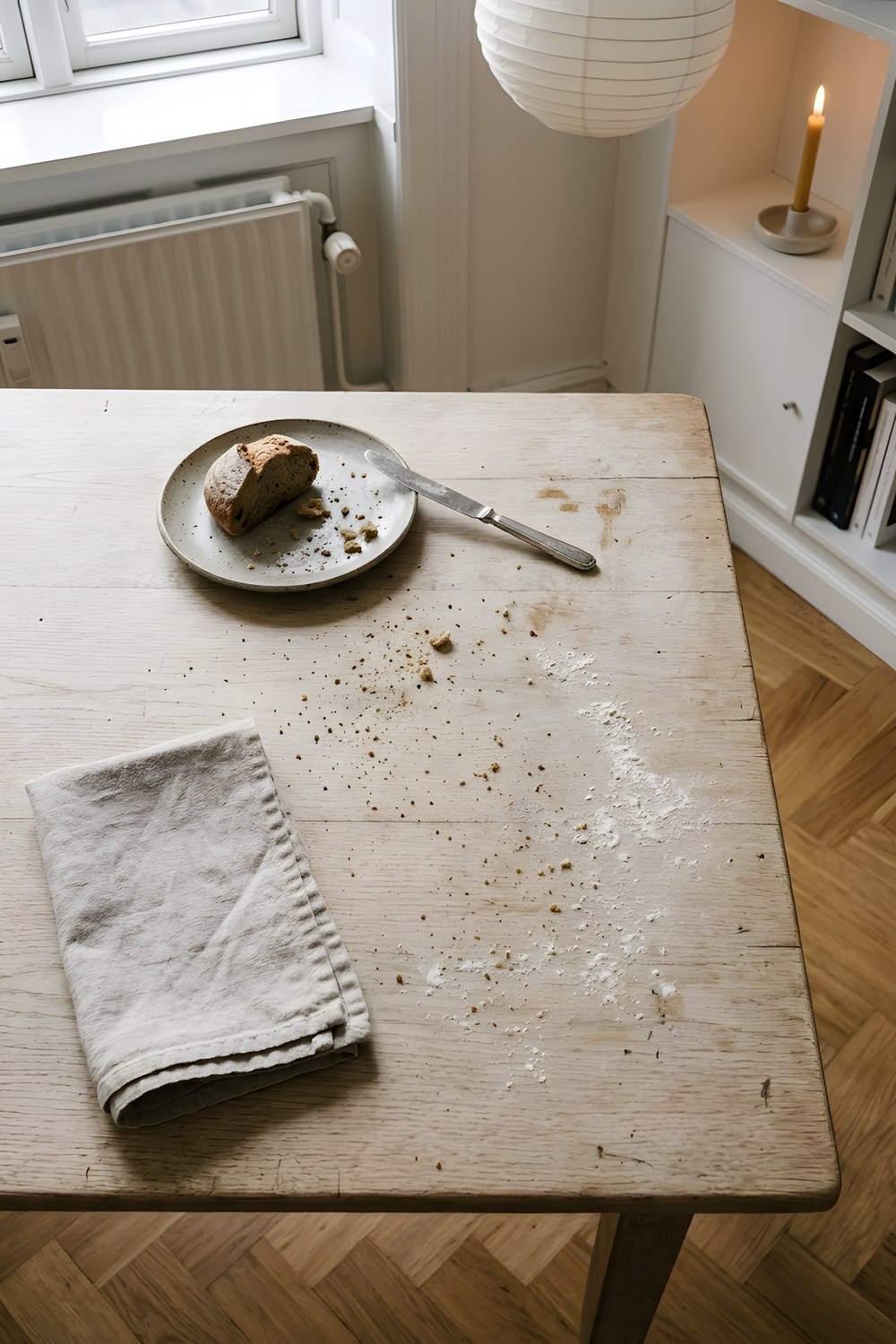
A board that sheds crumbs into flour is only wood until you know what to check before it goes near dough. A few small details separate one that lasts from one that warps by winter.
Weight and grain tell you more than looks
A board scattered with flour looks the same in a photo whether it costs little or a lot, so judge it by what a picture cannot show. Pick it up. A good board has real weight for its size, and the end grain, the short cut edges, should show tight, even lines rather than wide gaps. End grain construction, where the wood fibers stand upright, resists knife marks and warping far better than a flat cut plank, though it also costs more and needs more care.
Finish decides whether it survives a Copenhagen winter
Apartments with old windows and uneven heat put wood through real swings in moisture, and a poorly finished board will crack along its length by the second cold season. Look for a food safe oil finish, usually mineral oil or a beeswax blend, rather than a hard varnish, which seals the surface but traps moisture and eventually flakes. A board that feels slightly dry to the touch out of the box is not a flaw; it means it has not been oiled recently, and a plain board needs that upkeep every few weeks to stay sound.
Size is a matter of taste, not a rule
There is no correct size for a board on a narrow kitchen counter. Some people want one large enough to hold a full batch of dough with room to spare; others want something small enough to lift into a drying rack between one wash and the next. Neither is wrong. What matters more than dimensions is whether the board sits flat without rocking, since a board that tips loses flour and crumbs off the edge before they ever reach the bowl. Set it on the counter and press each corner before deciding, rather than trusting the label alone.