Why a candle stub still earns a spot on the nightstand
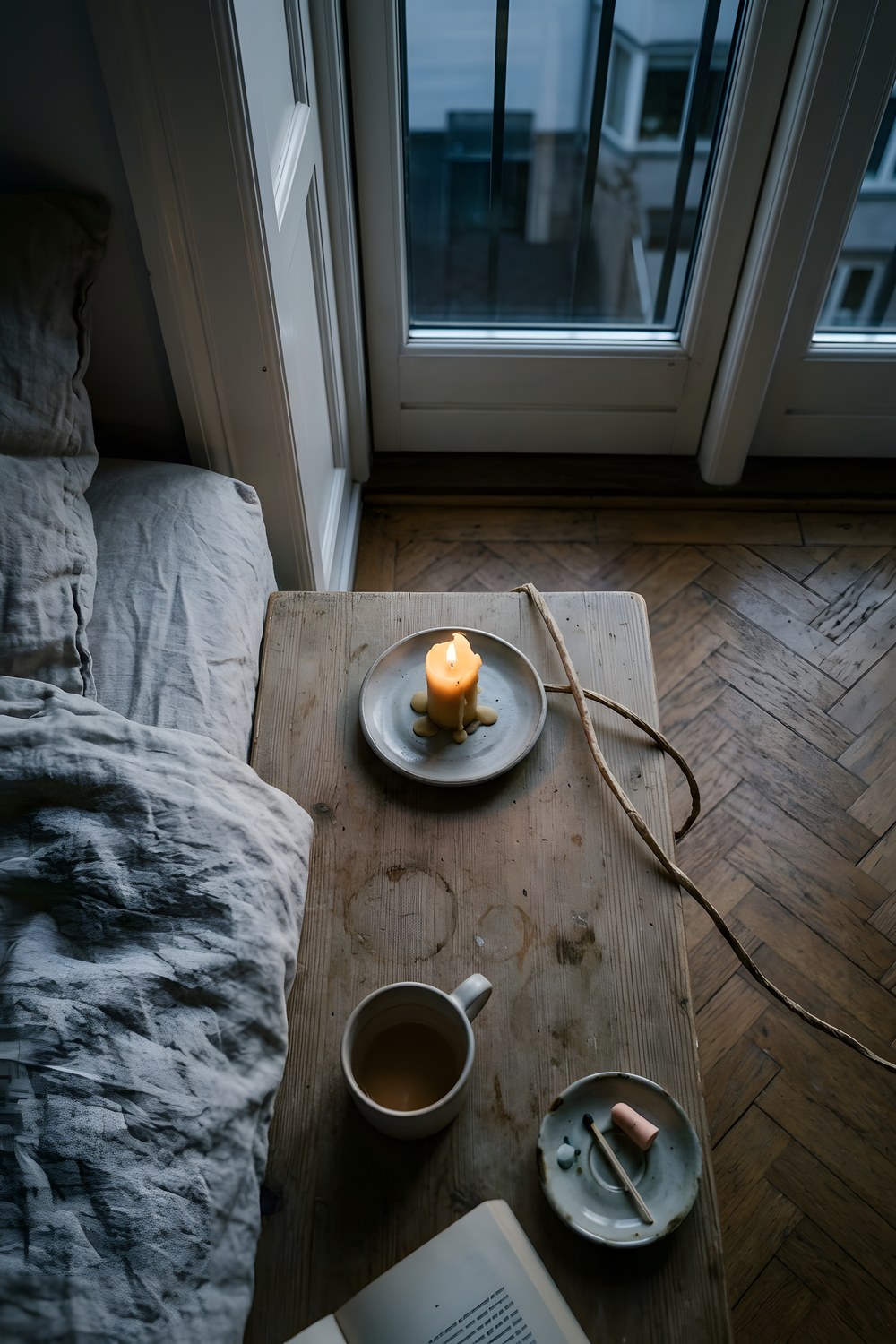
A burned down candle rarely gets thrown out right away. There is a plain reason people keep lighting the last inch instead of tossing it.
The habit
Walk into most small flats before sunrise and you will find a low table by the bed holding a candle that is mostly gone: an inch of wax, a bent wick, a scorched glass edge. Nobody keeps burning it for the scent, which has usually faded by then. They keep it because of what happens right before sleep and right after waking, two moments when a bright ceiling light feels wrong.
The reason behind it
Light tells the body what time it is. A ceiling bulb throws a flat, even wash across a whole room, which reads to the nervous system as daytime, meeting time, get up and move time. A flame does the opposite. It sits low, close to the surface it rests on, and its light falls off sharply a foot or two away, so most of the room stays in shadow. That kind of pooled, uneven light is closer to what a fire or an oil lamp gave people for most of human history, before electricity made every room equally bright at every hour. A small flame does not ask the eyes to adjust the way a switched on lamp does, so the last minutes before sleep and the first minutes after waking stay soft instead of abrupt.
This is also why the candle rarely gets replaced the moment it burns low. A stub still throws that same pooled light, just smaller and dimmer, and dimmer at that hour is closer to the point. A cord trailing off toward a paper lamp in the corner does similar work, since paper diffuses a bulb’s light rather than aiming it straight at a wall.
What it is not
None of this is about the scent, the wax, or how long a candle lasts. It is about where the light sits and how far it reaches, which is a matter of geometry more than taste. Two people can disagree about whether a room should smell like anything at all and still agree that a flame belongs closer to the bed than the switch by the door.