What Makes a Wardrobe Rail Actually Worth Having
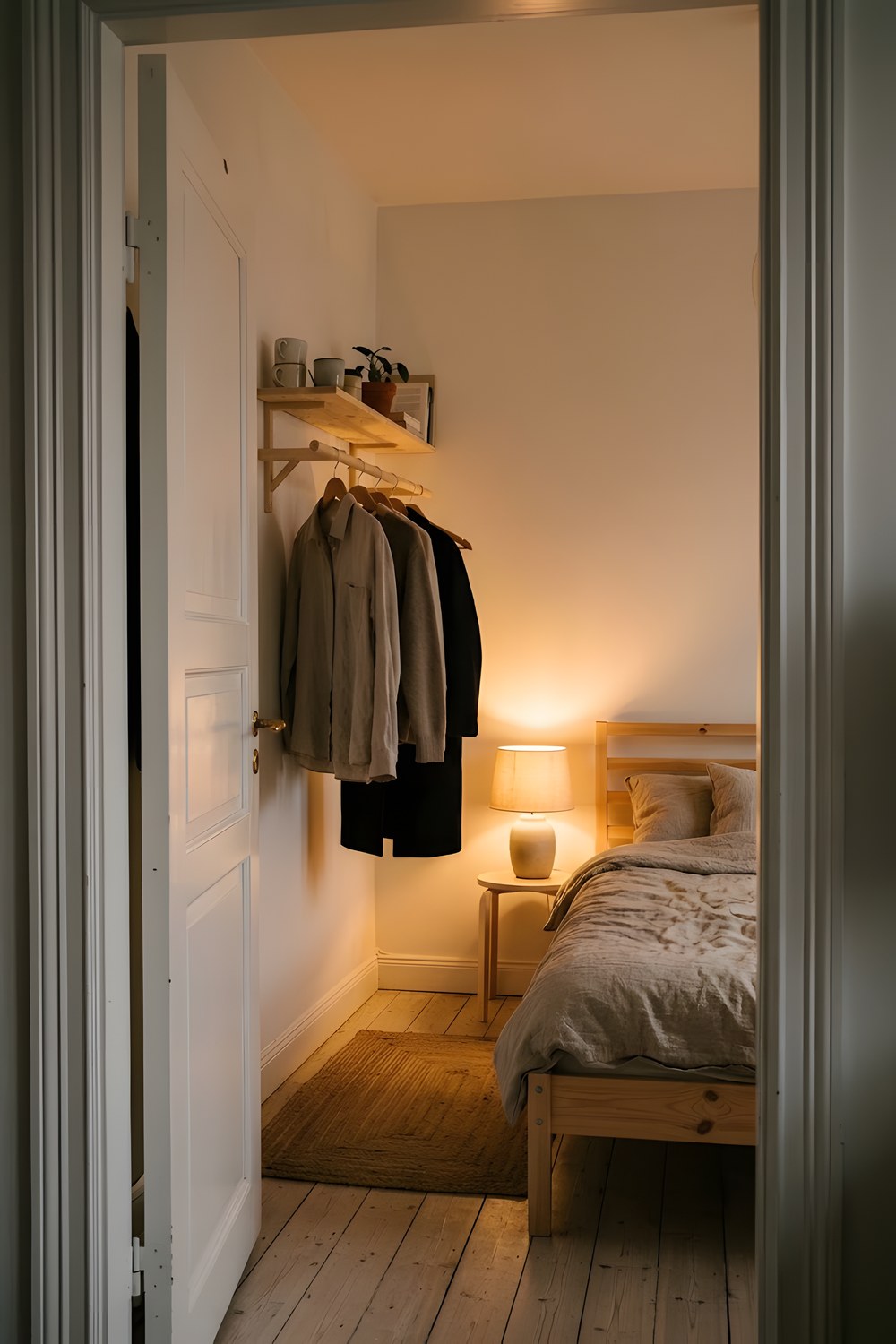
A rail holding four garments tells you more about the fabric of daily life than a full closet ever could. Here is what separates one worth keeping from one that just holds clothes.
Weight before width
A good rail is judged by what it can carry without bowing in the middle. Look at the diameter of the pole itself, not the length. Anything under about three centimetres across will sag under the weight of a wool coat within a year, even if the bracket holding it is sturdy. Solid oak or beech dowel holds a straight line for decades. Thin metal tubing, the kind often sold as a space saver, tends to flex first at the centre, which is exactly where you notice it, since that is where the eye lands when you walk into the room.
What the garments themselves are asking for
A rail with three plain things on it, a linen shirt, a wool jumper, a pair of trousers with some drape to them, works because each piece hangs with its own weight and does not need a shelf to hold its shape. That is really a question about the fabric rather than the furniture. Linen wants air on both sides and creases if crowded. Wool wants room too, partly so moths have fewer folds to hide in. If everything you own needs to be folded flat to survive, a rail alone will not serve you and a shelf becomes the more honest choice, not a lesser one.
Fixing point matters more than finish
The part nobody photographs is the bracket going into the wall. In a rented flat with plaster or stud walls, the rail is only as good as what it is screwed into. A beautiful pole on a weak fixing will eventually pull free, usually taking a chunk of wall with it. Ask what the bracket is rated to hold before asking what wood the rail is made from. A plain pine rail on a solid fixing will outlast an elegant one on a hollow wall every time, and that is not a matter of taste, it is a matter of load.