Why banana and peanut butter is a genuine pair, not just a habit
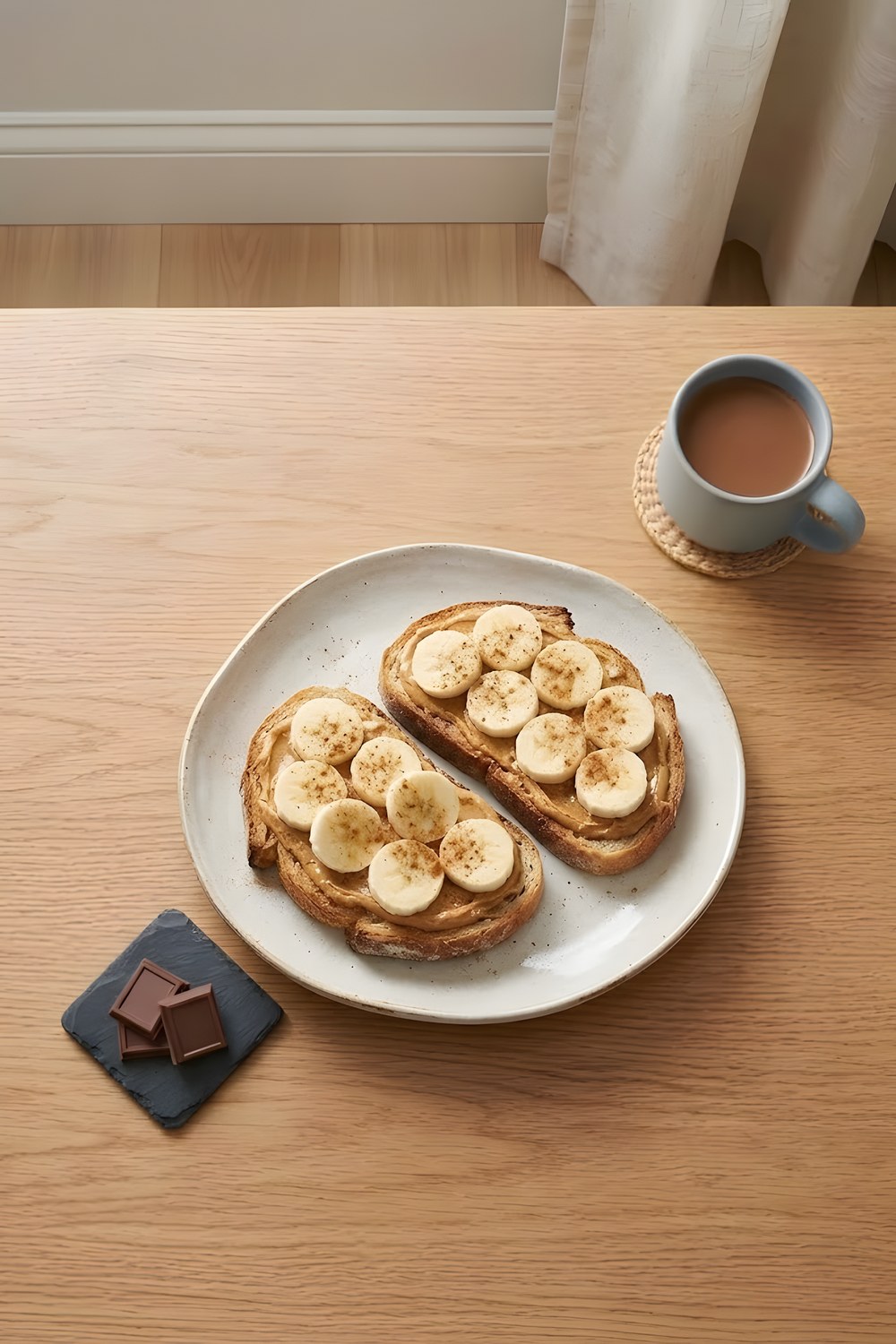
The toast on the plate looks like something you throw together without thinking. There is a real reason it works, and it comes down to what happens between the fruit and the fat.
A pairing older than the toast
Banana and peanut butter shows up in kitchens for a plain reason: one is mostly sugar and water, the other is mostly fat and protein, and together they slow each other down. Fruit sugar on its own moves through you fast. Add a spoon of ground peanuts and the digestion of that sugar stretches out, because fat takes longer to break down and holds the sugar back with it. That is the whole trick behind why this combination feels steadier than either food alone.
What the banana is actually doing
A ripe banana carries its sugar as glucose and fructose already split apart, which is why it tastes sweet without any added sugar at all. A banana that is still slightly green carries more of that sugar as starch instead, so it tastes milder and behaves a little differently once digested. Neither is wrong, it is a matter of taste and of how much sweetness a person wants on the plate that morning.
Why the fat matters as much as the spread
Ground peanuts are roughly half fat by weight, and that fat is the part doing the quiet work. It is not there to make the toast richer, though it does that too. It is there because fat slows gastric emptying, meaning food sits in the stomach a little longer before moving on. Paired with the toast underneath, which is mostly starch and adds its own steady release, the plate ends up built from three different speeds of digestion layered on top of each other. That layering, not any single ingredient, is why this particular plate has stuck around in so many kitchens for so long.