Why West Facing Rooms Need Less Furniture, Not More
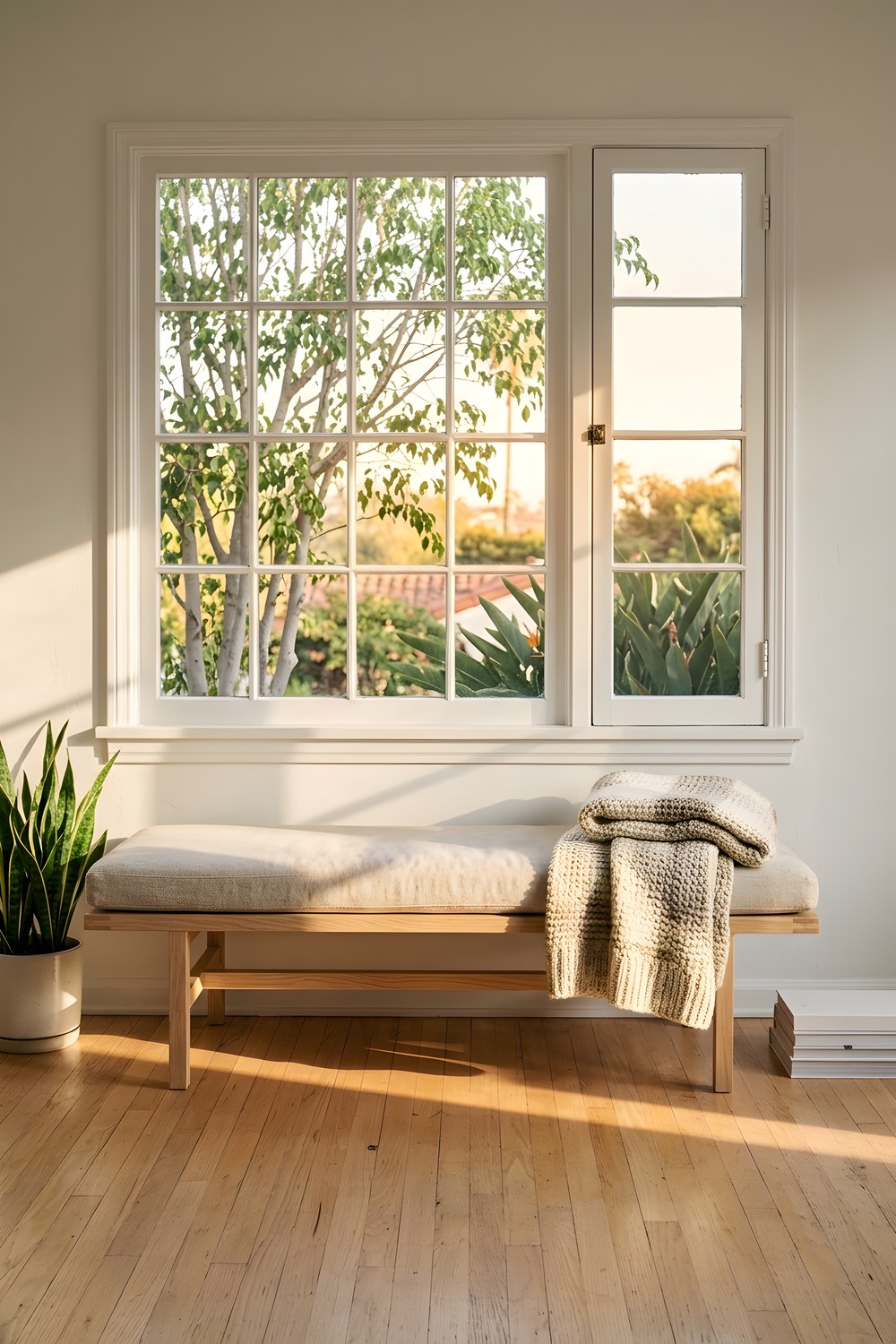
A bench under a west window works because of what it leaves out. Here is what changes when the sun starts arriving lower and later in the year.
The angle does the work
A room with a west facing window gets its best light in the second half of the day, and for a few weeks around now that light arrives lower in the sky than it did in July. The beam travels farther across the floor before it hits a wall, which is why a single bench catches it fully while a sofa against the same wall would only get a corner of it. Low, backless seating under a window is not a style choice so much as a response to where the sun actually lands. A tall headboard or a stacked bookcase in that spot would just block the thing the window is for.
What the season changes
As the sun’s path shifts through September, the patch of warm floor under a west window moves and shortens by the week. A bench that felt perfectly placed in August can end up half in shadow by October, so it is worth watching where the light actually falls over a few afternoons before deciding a piece belongs there permanently. Wool holds heat from that direct sun in a way linen does not, which is a practical reason a throw earns its place at the end of a bench rather than folded away in a closet all summer. It is doing a job, not just sitting there.
Bare floor is not empty floor
The unmoderated stretch of oak in front of the bench matters as much as the bench does. A rug in that exact spot would cut the reflected light bouncing back up onto the ceiling, which is part of what makes a room like this read as bright even in late afternoon when direct sun is fading elsewhere in the house. Leaving that patch uncovered is a small decision with a real effect on how the whole room feels an hour before sunset, long after the sun has left the window itself.